 Contact us
Quantum Computing's Own Paradigm Shift: Mi-Bo Founder Yaoyun Shi on Technological Evolution and AI at the World Laureates Forum
On October 30–31, 2026, Dr. Yaoyun Shi, founder of Mi-Bo Sui-Li, attended the 2026 World Laureates Forum in Shanghai by invitation. He delivered a keynote at the second International Conference on Engineering Intelligence and joined the keynote panel at the forum on “The Next Decade: Future Semiconductors and Chips.”
This year's forum was themed “Paradigm Shifts: The Next Decade of Scientific Breakthroughs.” Shi's two contributions raised complementary questions: What engineering paradigms must quantum computing itself break through as it seeks to transform computing? And as AI takes the lead in reshaping computing and scientific research, how should quantum computing redefine its value?
Who Disrupted Whom? A New Role for Quantum Computing
On October 31, at the second International Conference on Engineering Intelligence, hosted by the Shanghai World Laureates Development Foundation and Tongji University, Shi delivered a talk titled “AI Tomorrow: How Quantum Can—and Can’t—Help,” describing an unexpected turn in the story of a would-be disruptor.
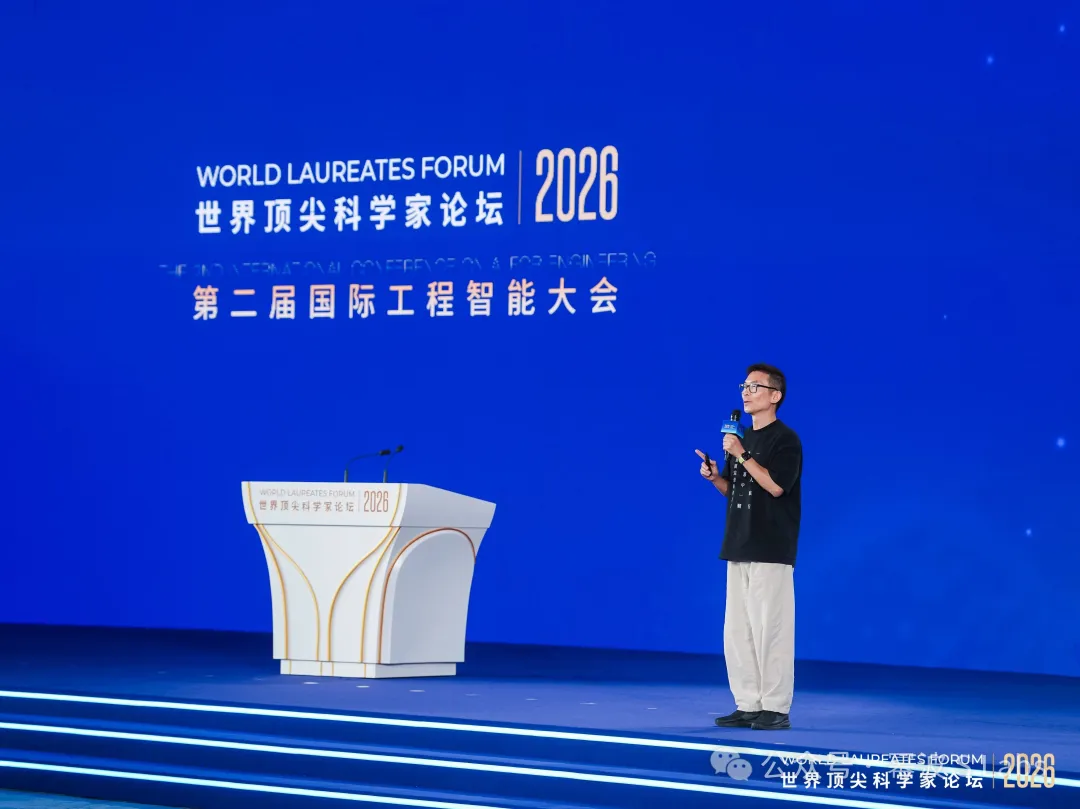
Figure 1. Yaoyun Shi delivering a keynote at the International Conference on Engineering Intelligence.
Having worked in quantum computing for nearly three decades, Shi has long explained its potential to disrupt classical computing. Yet this long-awaited disruption was realized first by AI, rather than quantum computing itself. The contrast reveals a new situation for the field: a technology originally intended to transform the computing paradigm is now having its own development path profoundly reshaped by the paradigm shift brought about by AI.
At the application level, this shift is embodied in Shi's concept of “Quantum-Leaped Computing”: enabling small quantum processors to add new capabilities to an already powerful classical computing ecosystem. Mature classical AI also provides a platform and application settings for contributions from small-scale quantum computing, allowing limited quantum capabilities to create greater value within larger computational workflows.
Drawing on recent quantum AI research, Shi outlined three directions worth exploring. First, quantum processors could generate data that classical methods cannot efficiently obtain, for use in training classical neural networks. Second, a small number of qubits could represent high-dimensional inputs or probability distributions, opening possibilities for machine learning tasks. Third, ideas from quantum computing and tensor networks could support model compression or improve fine-tuning efficiency. Some of these quantum-inspired methods can already run directly on classical computers.
In Shi's view, exploring the early practical value of these approaches need not wait for rigorous theoretical proofs of quantum speedup. Quantum computing and the methods it inspires offer a distinct set of tools for representation, sampling and modeling. Some quantum processes, even at a scale of around one hundred qubits, may be beyond the efficient simulation capabilities of large classical computing clusters. Different “hammers” offer new ways to approach a problem, but their practical value must still be tested in specific tasks and complete computational workflows.
Such evaluation must account for all costs, including state preparation, repeated measurements and data transfer, to determine whether quantum computing's contribution can improve an end-to-end AI workflow enough to justify those costs.
Before Transforming Computing, Rethink Its Own Engineering Paradigms
Rethinking applications also provides clearer direction for hardware innovation. At the forum on “The Next Decade: Future Semiconductors and Chips,” jointly hosted by the Chinese Institute of Electronics and Shanghai University, Shi focused on another paradigm shift: how quantum computing can move beyond conventional engineering approaches to achieve scalability.
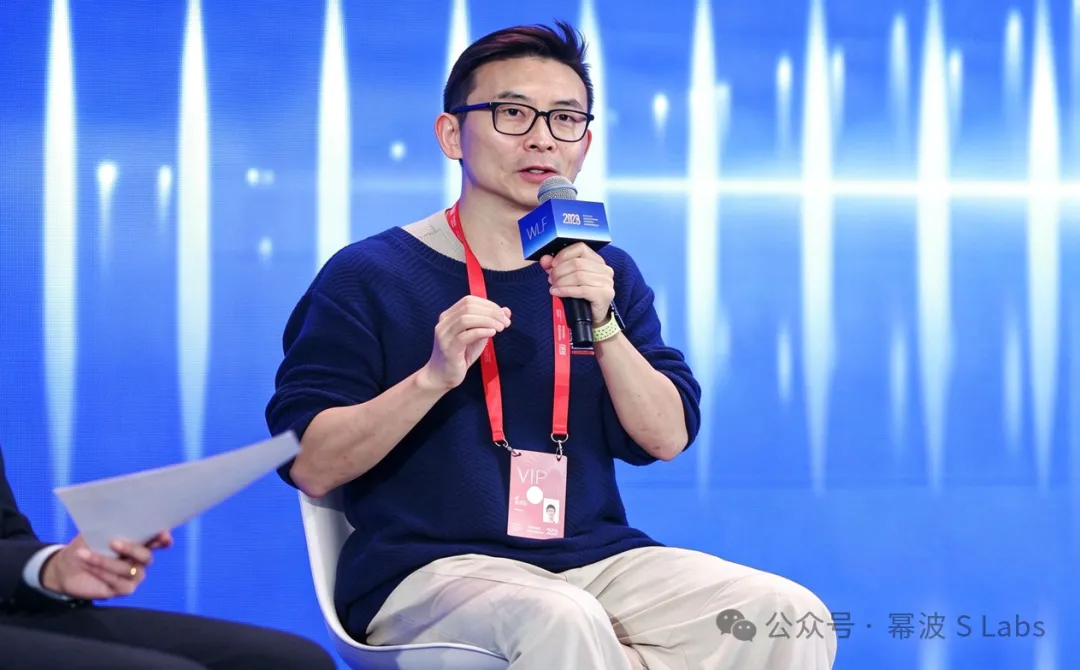
Figure 2. Yaoyun Shi discussing engineering pathways for quantum computing.
During the keynote panel on “The Next Decade: Convergent Innovation in Semiconductors and Artificial Intelligence,” moderator Professor Shouyi Yin, dean of Tsinghua University's School of Integrated Circuits, asked which core engineering paradigms must be overcome to bring quantum chips to scale from a chip-design and manufacturing perspective. Shi outlined two key directions that Mi-Bo Sui-Li is pursuing.
01 Bringing Control Closer to the Qubits
Qubits operate at extremely low temperatures, while most control electronics remain at room temperature, connected by dense cabling. Shi has described this architecture as a “head and body in separate places.” As qubit counts grow, wiring complexity, the number of control channels and system costs have become central challenges to scaling. Bringing control closer means moving more control functions to the cryogenic end of the system. Cryogenic CMOS can operate in the 4 K temperature range; Mi-Bo Sui-Li focuses on superconducting electronic control systems that can operate at millikelvin temperatures and be co-packaged with qubits, systematically easing wiring and interconnect demands at the architectural level.
02 Scaling Out: From Single Chips to Modular Systems
The Mi-Bo team began exploring 3D stacking for quantum chips during its time at the Alibaba Quantum Laboratory and has now demonstrated 64-qubit multilayer 3D stacked integration. According to Shi, the chip's average energy-relaxation time, T₁, can exceed 100 microseconds, with the best values exceeding 0.5 milliseconds. Building on this work, Mi-Bo Sui-Li proposes a hierarchical scaling roadmap from chiplets to 3D modules, then to quantum-interconnected arrays and clusters spanning multiple cryogenic systems. Co-design of chips, advanced packaging and interconnects provides an engineering foundation for larger superconducting quantum computing systems.
By combining its internal technological development with the external transformation driven by AI, Mi-Bo Sui-Li aims to support the convergence of quantum computing and AI with a high-quality quantum hardware foundation, while using application outcomes to evaluate and advance system innovation. Seeking to transform the computing paradigm while continually refining its own technical and application paradigms is a central path toward practical quantum computing.
 Contact us