 Contact us
Mi-Bo Presents 64-Qubit 3D Integration at an International Conference on Scaling Quantum Computing
An International Forum for Exchange with Leading Quantum Scientists
From October 19 to 23, 2026, Frontiers in Scaling Superconducting Quantum Computing, a high-level academic conference hosted by Google Quantum AI, took place on the shores of Lake Garda, Italy. Ran Gao, head of Mi-Bo’s superconducting quantum processor team, was invited to deliver a talk titled ‘Multi-stack 3D Integration for Scalable Superconducting Quantum Processors,’ sharing Mi-Bo’s approach and results in advanced 3D stacked integration with leading scientists and industry experts from the international quantum computing community.
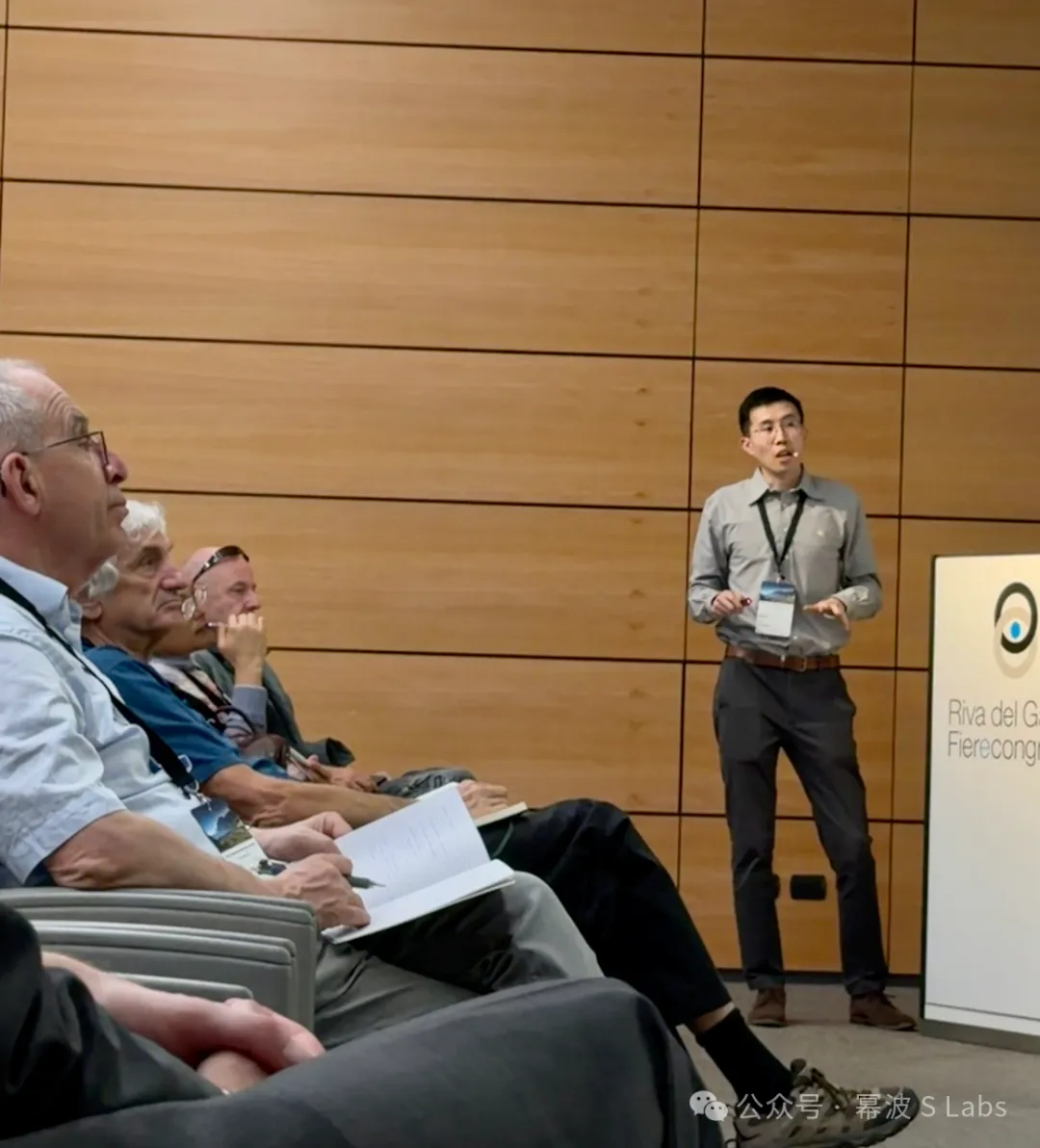
Figure 1. Ran Gao delivering an invited talk at the conference.
64-Qubit Multi-Stack 3D Integration: Moving Beyond Planar Architectures
Gao presented Mi-Bo’s technical progress and recent advances in 3D stacked integration for superconducting quantum chips: a 64-qubit multi-stack 3D integrated architecture, with a median coherence time exceeding 100 microseconds and a maximum coherence time exceeding 500 microseconds. The design integrates the qubit layer, interposer layer and signal-routing layer into a multi-layer stack, enabling higher integration density and more flexible signal interconnects while preserving qubit coherence in the stacked architecture. The realization of this 64-qubit multi-layer structure provides an important practical foundation for advancing 3D stacking technology from individual-device validation to system-level validation in more complex quantum processors. According to currently available research literature, IBM is among the representative organizations that have demonstrated comparable technology.
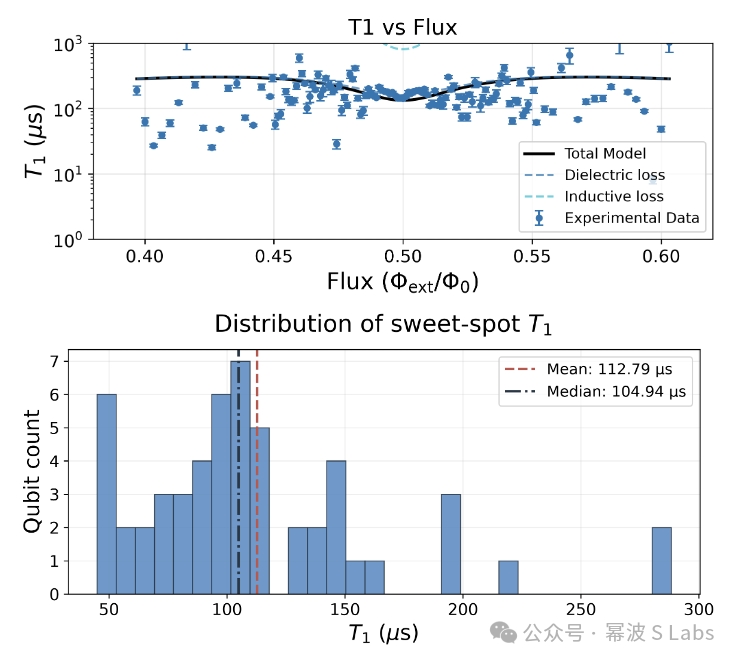
Figure 2. Decoherence analysis and coherence-time statistics for the 64-qubit array.
Continued Research Toward Scalable Quantum Computing
As the industry moves beyond a focus on qubit count alone toward coordinated improvements in qubit performance, system architecture, fabrication processes and quantum error correction, advanced integration technologies will play an increasingly important role in quantum computing hardware. Mi-Bo will continue to address the core technical challenges of scaling superconducting quantum processors through research into advanced 3D integration and chip fabrication, exploring hardware architectures with higher integration density, improved quantum performance and greater potential for scaling.
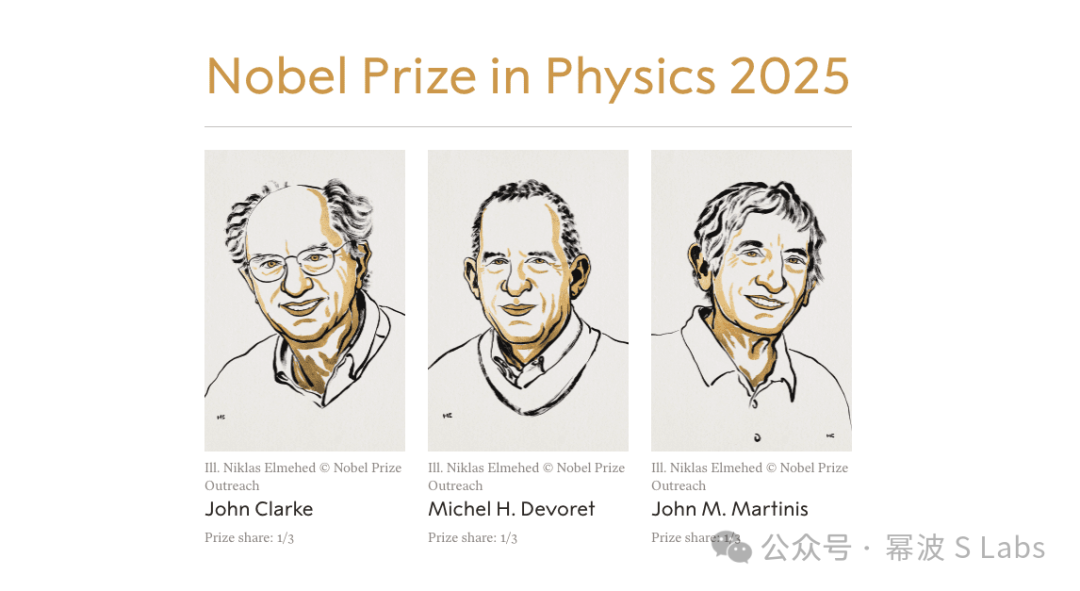
The conference brought together quantum computing experts from Google Quantum AI, IBM, Qolab, Amazon, D-Wave, and leading universities and research institutions around the world. It was jointly organized by internationally renowned scientists including Michel Devoret, a recipient of the 2025 Nobel Prize in Physics. Attendees included fellow 2025 Nobel Prize in Physics laureate and Qolab co-founder John Martinis, as well as Google Quantum AI head Hartmut Neven. The invitation to present at this conference reflects Mi-Bo’s technical strength and international competitiveness in advanced integration for superconducting quantum chips.
About Mi-Bo
Mi-Bo Sui-Li is a computing platform company focused on the convergence of quantum computing and artificial intelligence. With research and development experience at Alibaba’s Quantum Laboratory, our team is committed to independent innovation.
We are building a complete technology stack spanning quantum chips, cryogenic control and system software to deliver an open, high-performance foundation for quantum computing, enabling ecosystem partners to develop their own middleware and industry applications. By integrating quantum computing with artificial intelligence and high-performance computing, we work with our partners to extend the boundaries of classical computing and build a quantum computing ecosystem for the future.
Our mission: transcend classical limits through quantum breakthroughs, and reshape possibilities through innovation.

Scan for more updates
 Contact us